HOUSEHOLD HAZARDOUS WASTE (HHW) PROGRAM
Key Sections:
- Announcements
- HHW Event Documents [right side]
- Coordinator Meetings [right side]
- Who Can Participate
- Types of Hazardous Waste – What items are accepted/unaccepted?
- Participation & Survey Data [right side]
- Education & Outreach [right side]
- Low Toxic Alternatives [right side]
- Alternative Disposal Options – What if I missed the event?
- Resource Library – links to other waste organizations
Announcements
NH DES announces a ban on the disposal of RECHARGEABLE (LITHIUM-ION) BATTERIES in household trash and solid waste facilities as of July 1, 2025. For more information, see our Solid Waste Management page.
Who Can Participate for 2025?
Residents and taxpayers in these 21 participating communities may bring 10 gal. or 50 lbs. of Household Hazardous Waste (HHW) to the collection site that is most convenient to them.
Participating Communities
Alexandria, Alton, Andover, Bridgewater, Bristol, Center Harbor, Franklin, Gilford, Gilmanton, Hebron, Holderness, Laconia, Meredith, Moultonborough, New Hampton, Sanbornton, Sandwich, Tamworth, Tilton, Tuftonboro, and Wolfeboro.
Types of Household Hazardous Wastes
How we dispose of common household products depends on the product’s contents and its toxicity to people, animals, and the environment. Some materials, if entirely used, can be placed in the landfill, other items can be recycled, but the majority should be taken to a Household Hazardous Waste (HHW) collection site.
Visit the NHDES website for specific information regarding:
ammunition/explosives/fireworks/flares, batteries, computers/electronics, paint, fluorescent bulbs, mercury devices, and fluorescent lamp–ballast–mercury recycling facilities
ACCEPTED & UNACCEPTED ITEMS
NOTE: We do not accept any universal waste at our collection event. However, many transfer stations do take universal waste year round. Universal wastes meet the regulatory definition of hazardous waste but, during accumulation and transport, pose a relatively low risk compared to other hazardous wastes, when recycled. In New Hampshire, universal wastes include aerosol cans, automotive antifreeze, certain batteries, cathode-ray tube televisions and computer monitors, mercury-containing devices, fluorescent lamps and certain pesticides. Please check with your local facility or use the following links:
Universal Waste Disposal Options (Residential) [coming soon]
Universal Waste Disposal Options (Municipal)
ACCEPTED ITEMS
The items in the following downloadable PDF are common hazardous products used in the home, yard & garden, workbench, and garage and include links to more information about specific products. These items CAN be brought to a HHW collection site for safe disposal. Download the PDF here.
UNACCEPTED ITEMS
We DO NOT take the following items at our annual HHW collections. Click on the links to identify alternative disposal options.
- Fluorescent bulbs/tubes
- CFLs
- Batteries (all types)
- Thermometers, thermostats, and other mercury containing devices
- Asbestos
- Propane Tanks – some local transfer stations accept tanks for a fee
- Fireworks/ammunition/explosives
- Fire extinguishers (contact your local transfer station or fire department for disposal options)
- Flares (including boat and road flares)
- Smoke Detectors
- Tires – check with your local transfer station for disposal options
- Acrylic/Latex Paint:
- Paint Calculator
- How to Dry Out Latex Paint for Disposal — LRPC Quick Guide
- Electronics (e-waste):
- Electronic/Appliance Repairs — A list of places to repair/restore, sell, and dispose of your household electronics and appliances in the Lakes Region.
- Electronic/Appliance Repairs — An interactive map of places to repair/restore, sell, and dispose of household electronics and appliances in the Lakes Region (as of July 2020).
- Electronic Waste Brochure
- Medical waste & household sharps:
- National Drug Take Back Day (April & October) | Year-Round Drop-Off Locations
- Visit the “Helpful Links” section of our Solid Waste Management page for information about household sharps.
Alternative Disposal Options
- Upper Valley Lake Sunapee Regional Planning Commission (UVLSRPC) allows non-residents and businesses to dispose of their waste for a fee. Non-residents must pay a $30 fee to dispose of up to 25 pounds (or 5 gallons). Small businesses can participate, but MUST pre-register 2 weeks in advance to receive a price quote.
- Call (603) 448-1680 or email tjosephson@uvlsrpc.org for more info. Use this link for more information about commercial collections.
Lakes Region Annual HHW Collections Event
2025 HHW Event Documents
- Collection Sites & Dates (Flyer 1)
- Collection Sites & Dates (Flyer 2)
- Detailed Tri-Fold Pamphlet (multi-color)
- Detailed Tri-Fold Pamphlet (blue)
- Collection Sites Map
- HHW FAQs
2025 Coordinator Meetings
Coordinator Meeting Dates:
- Wednesday, April 23rd @ 6 PM
Agenda | Meeting Notes - Wednesday, May 28th @ 6 PM
Agenda (no meeting notes taken) - Wednesday, July 9th @ 6 PM
Agenda | Presentation Slides - Wednesday, October 1st @ 6 PM
Agenda | Meeting Notes
Support the Lakes Region HHW Collection Program
The Lakes Region Household Hazardous Waste (HHW) program is funded by annual contributions from participating communities and a grant from the NH Department of Environmental Services.
Please consider forwarding a donation to help cover the rising disposal costs by mailing a check or money order to use at:
Lakes Region Planning Commission
103 Main Street, Suite #3
Meredith, NH 03253
*Make sure to write “HHW” in the description line.
Education & Outreach
- Moving or Selling Your Home?
- Green Painting Tips
- Home & Garden Pest Management
- Batteries (storage and disposal)
- Reducing Hazardous Products in Businesses (booklet)
Low Toxic Alternatives
- HHW Alternatives Flipbook (2017 sources)
- DYI Personal Care Products. Recipes for shampoo, conditions, body scrub, deodorant, bug repellant, as well as various resources.
- @HHWHealthyHome YouTube videos for make-your-own:
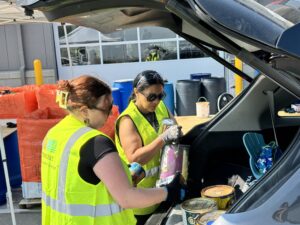
What Should I Expect When I Attend an HHW Event?
Watch the video below to find out!
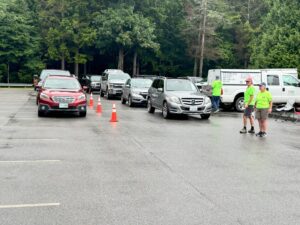
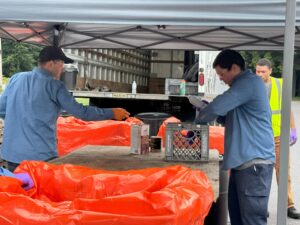
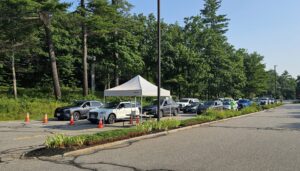
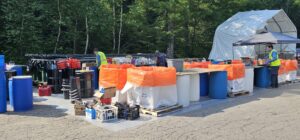
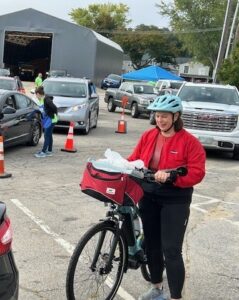
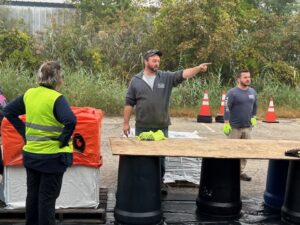
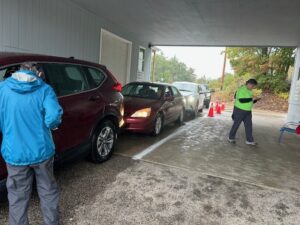
HHW Event Photos


Resource Library
- American Coatings Association – The parent organization of PaintCare, working on paint product stewardship in a number of states.
- Appliances & Electronics Recycling: A Green Guide – When recycling large appliances or electronics, there are certain guidelines that should be followed.
- Call2Recycle, Inc. – Takes rechargeable batteries from toys, tools, and various electronic devices for free.
- Earth911.com – A privately owned, for-profit company that specializes in providing consumers with accessible and actionable recycling information across the country. Their Recycling Directory contains information for recycling over 240 different products, including local drop-off locations, and is free to use.
- NH Department of Environmental Services Hazardous Waste Program – Fact sheets, rules/regulatory, contacts, grants, FAQs, training options, and information for small businesses.
- North American Hazardous Materials Management Association (NAHMMA) – Dedicated to pollution prevention and reducing the hazardous components entering municipal streams. The #1 resource for hazardous waste professionals.
- Product Stewardship Institute (PSI) -Responsible for introducing Extended Producer Responsibility (EPR) policies, programs, and law. In 2022 alone, legislators in 18 states considered 62 unique EPR bills covering 15 different product categories – and five of them became law. Visit their EPR Laws Map for laws by state and by product.
- Rehab the Lab – EPA’s web-based toolkit providing for safe chemical management in K-12 schools.
- Community Action Works (f/k/a Toxics Action Center) – Organizers have worked with hundreds of communities across New England to clean up hazardous waste sites, reduce industrial pollution, curb pesticide use, ensure healthy land use, replace dangerous chemicals with safer alternatives, and oppose dangerous waste, energy, and industrial facilities. Contains information on accomplishments, state toxic maps and reports (NH), statistics for action, energy, solid & zero waste, pesticides, sludge, toxics, salvage yards, mold, etc.
- UNH Cooperative Extension – A great place for sound advice on environmentally safe methods of maintaining gardens and lawns.
*Any opinions, findings, and conclusions or recommendations expressed in this material are solely the responsibility of the authors and do not necessarily represent the official views of the Rural Utilities Service.
Part of this material is based upon work supported under a grant by the Rural Utilities Service, United States Department of Agriculture.
Lakes Region Planning Commission is an equal opportunity provider and employer.